Element 020
Calcium (Ca)
The metal of bones, teeth, shells and limestone. Calcium compounds also make the cement and plaster we build with.
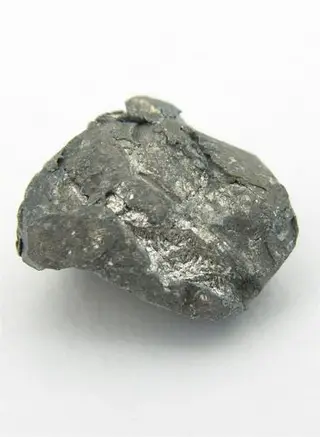
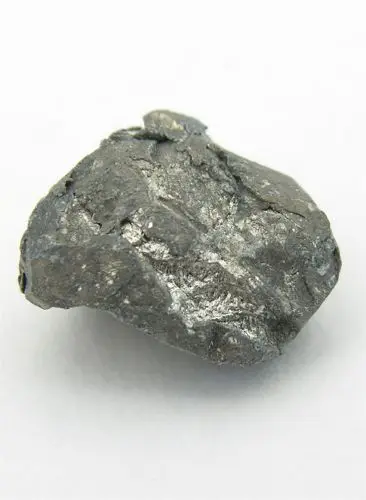
Calcium is a silvery alkaline earth metal. As a pure metal it reacts with water and air, so it is rarely seen; in compounds it is everywhere.
Limestone, marble and chalk are calcium carbonate. In the body, calcium builds bones and teeth and is needed for muscles, nerves and blood clotting.
Quick answers
- What is calcium?
- Calcium (Ca) is an alkaline earth metal with atomic number 20. It is a solid at room temperature. The metal of bones, teeth, shells and limestone. Calcium compounds also make the cement and plaster we build with.
- Where is calcium found?
- Calcium is the fifth most abundant element in Earth’s crust. It is found in limestone, gypsum and fluorite, and dissolved calcium makes water “hard”.
- What is calcium used for?
- Its main uses are cement and concrete; plaster; food and medicine. Heating limestone gives lime, the key ingredient of cement.
At a glance
| Atomic number | 20 |
|---|---|
| Symbol | Ca |
| Standard atomic weight | 40.078 ± 0.004 |
| Natural isotopes | 6 (IUPAC CIAAW 2024) |
| Family | Alkaline earth metal |
| Group | Group 2 |
| Period | Period 4 |
| Block | s |
| Electron configuration | [Ar] 4s2 orbital diagram → |
| State at room temperature | Solid |
| Melting point | 842 °C (1,547 °F, 1,115 K) |
| Boiling point | 1,484 °C (2,703 °F, 1,757 K) |
| Density | 1.54 g/cm³ |
| Electronegativity (Pauling) | 1 |
| Atomic radius | 231 pm |
| First ionization energy | 6.113 eV |
| Oxidation states | +2 |
| Discovery | 1808 · Humphry Davy |
Discovery
In 1808 Humphry Davy isolated calcium by electrolysis of a mixture of lime and mercury oxide. Lime itself had been used for thousands of years.
Where the name comes from
From the Latin calx, lime.
Where is calcium found?
Calcium is the fifth most abundant element in Earth’s crust. It is found in limestone, gypsum and fluorite, and dissolved calcium makes water “hard”.
Where every element is found →
What is calcium used for?
- Cement and concrete. Heating limestone gives lime, the key ingredient of cement.
- Plaster. Gypsum (calcium sulfate) is used for plasterboard and plaster.
- Food and medicine. Calcium carbonate is used as an antacid and a calcium supplement.
- Metallurgy. Calcium metal removes oxygen and sulfur from molten metals.
What every element is used for → · Where are the elements found? →
Common compounds
| Compound | Formula | Note |
|---|---|---|
| Calcium carbonate | CaCO₃ | Limestone, marble, chalk and seashells. |
| Calcium oxide | CaO | Quicklime. |
| Calcium sulfate | CaSO₄ | The main component of gypsum and plaster. |
| Hydroxyapatite | Ca₅(PO₄)₃(OH) | The mineral part of bone and tooth enamel. |
Notable isotopes
- Ca-4096.941%
- Ca-420.647%
- Ca-430.135%
- Ca-442.086%
- Ca-460.004%
- Ca-480.187%
Percent by number of atoms. The light band shows the range over which the share varies in natural samples. Source: IUPAC CIAAW 2024
| Isotope | Half-life | Note |
|---|---|---|
| Calcium-40 | Stable | About 96.9% of natural calcium. |
| Calcium-44 | Stable | About 2.1%. |
| Calcium-48 | far longer than the age of the universe | About 0.19%. Used as the accelerator beam to make superheavy elements such as oganesson and tennessine. |
Safety
Metal reacts with water
Calcium metal reacts with water to give hydrogen gas and calcium hydroxide, which irritates the skin.
Calcium in the diet is essential; supplements should follow medical advice.
Did you know?
- An adult body contains about 1 kilogram of calcium, 99% of it in bones and teeth.
- In a flame test, calcium gives an orange-red color.
- Natural chalk is calcium carbonate; some school chalk is made of gypsum (calcium sulfate).
Frequently asked questions
Is calcium a metal?
Yes. Pure calcium is a reactive silvery metal, but in nature it is always found in compounds.
What makes water hard?
Dissolved calcium and magnesium ions. They leave limescale in kettles and pipes.
What are the properties of calcium?
Atomic number 20, symbol Ca, atomic mass 40.078. It is a solid at room temperature. It melts at 842 °C (1,547 °F) and boils at 1,484 °C (2,703 °F). Density 1.54 g/cm³. Electronegativity 1 (Pauling).
Sources
- Royal Society of Chemistry: Calcium
- Encyclopaedia Britannica: Calcium
- NNDC NuDat 3 (nuclear data)
- PubChem Periodic Table (NIH)
- IUPAC/CIAAW standard atomic weights
- Royal Society of Chemistry, Periodic Table
- Wikipedia: Calcium
Last checked: 16 November 2026
Other group 2 elements
Beryllium
A light, very stiff metal found in emeralds. It is transparent to X-rays, and the mirrors of the James Webb Space Telescope are made of it.
Magnesium
A light, strong metal that burns with a dazzling white flame. It sits at the heart of chlorophyll, the green pigment of plants.
Strontium
The element that makes fireworks red, named after a Scottish village. A radioactive form from nuclear tests was once measured in children’s teeth.
Barium
A soft, reactive metal whose heavy compounds show up the gut on X-rays and turn fireworks green.
Radium
The intensely radioactive metal discovered by Marie and Pierre Curie. It once lit watch dials; today one radium isotope is used in cancer treatment.