Element 019
Potassium (K)
A soft metal that reacts violently with water and burns with a lilac flame. Our nerves and muscles need potassium, and so do crops.
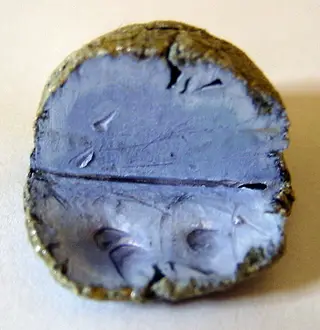
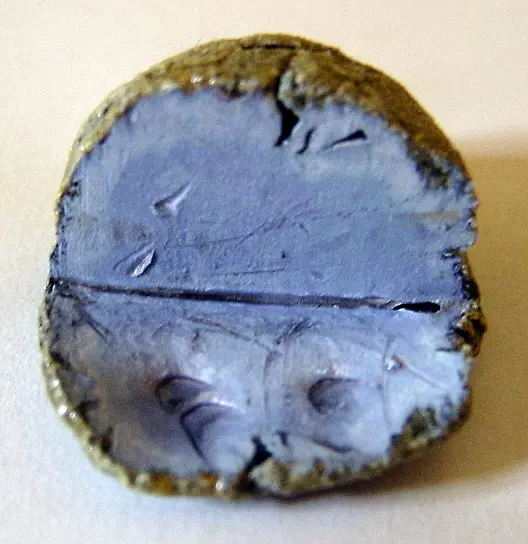
Potassium is a soft, silvery alkali metal, even more reactive than sodium. Dropped into water, it fizzes, skates across the surface and bursts into lilac flames.
Potassium ions help nerves send signals and keep the heart beating regularly. Plants need even more of it than animals do.
Quick answers
- What is potassium?
- Potassium (K) is an alkali metal with atomic number 19. It is a solid at room temperature. A soft metal that reacts violently with water and burns with a lilac flame. Our nerves and muscles need potassium, and so do crops.
- Where is potassium found?
- Potassium is common in Earth’s crust, in minerals such as feldspar and in salt deposits left by evaporated seas. Canada, Russia and Belarus are major producers of potash.
- What is potassium used for?
- Its main uses are fertilizers; chemicals; fireworks and explosives. Most potassium is used as potash fertilizer.
At a glance
| Atomic number | 19 |
|---|---|
| Symbol | K |
| Standard atomic weight | 39.098 ± 0.001 |
| Natural isotopes | 3 (IUPAC CIAAW 2024) |
| Family | Alkali metal |
| Group | Group 1 |
| Period | Period 4 |
| Block | s |
| Electron configuration | [Ar] 4s1 orbital diagram → |
| State at room temperature | Solid |
| Melting point | 63.38 °C (146.1 °F, 336.53 K) |
| Boiling point | 759 °C (1,398 °F, 1,032 K) |
| Density | 0.89 g/cm³ |
| Electronegativity (Pauling) | 0.82 |
| Atomic radius | 275 pm |
| First ionization energy | 4.341 eV |
| Oxidation states | +1 |
| Discovery | 1807 · Humphry Davy |
Discovery
In 1807 Humphry Davy passed an electric current through molten potash (potassium hydroxide). Globules of metal appeared and burst into flame: potassium was the first metal isolated by electrolysis.
Where the name comes from
From potash, the residue of plant ash boiled in pots. The symbol K comes from the Latin kalium, based on the Arabic al-qali, plant ashes.
Where is potassium found?
Potassium is common in Earth’s crust, in minerals such as feldspar and in salt deposits left by evaporated seas. Canada, Russia and Belarus are major producers of potash.
Where every element is found →
What is potassium used for?
- Fertilizers. Most potassium is used as potash fertilizer.
- Chemicals. Potassium hydroxide is used to make soft soaps and as the electrolyte in alkaline batteries.
- Fireworks and explosives. Potassium nitrate (saltpeter) is an ingredient of gunpowder.
- Food. Potassium chloride is used in some low-sodium salt substitutes.
What every element is used for → · Where are the elements found? →
Common compounds
| Compound | Formula | Note |
|---|---|---|
| Potassium chloride | KCl | Potash fertilizer; the mineral sylvite. |
| Potassium nitrate | KNO₃ | Saltpeter; an old fertilizer and an ingredient of gunpowder. |
| Potassium permanganate | KMnO₄ | Deep purple, strong oxidizing agent. |
Notable isotopes
- K-3993.2581%
- K-400.0117%
- K-416.7302%
Percent by number of atoms. The light band shows the range over which the share varies in natural samples. Source: IUPAC CIAAW 2024
| Isotope | Half-life | Note |
|---|---|---|
| Potassium-39 | Stable | About 93% of natural potassium. |
| Potassium-40 | about 1.25 billion years | Slightly radioactive. Its decay to argon is used to date volcanic rocks. |
Safety
Metal reacts violently with water
Potassium metal reacts with water and moist air and can ignite. It is stored under oil.
Potassium in food is essential. People with kidney problems may need to limit it, on medical advice.
Did you know?
- Bananas are rich in potassium and, because of potassium-40, very slightly radioactive. The amount is harmless.
- In a flame test, potassium turns the flame a pale lilac.
- Nerve signals depend on potassium and sodium ions moving across cell membranes.
Frequently asked questions
Why is potassium kept under oil?
It reacts quickly with oxygen and water vapor in air. Oil keeps the air away.
Which foods contain potassium?
Fruit and vegetables such as bananas, potatoes, beans and leafy greens are good sources.
Is potassium a metal?
Yes. Potassium is a metal, one of the alkali metals.
What are the properties of potassium?
Atomic number 19, symbol K, atomic mass 39.098. It is a solid at room temperature. It melts at 63.38 °C (146.1 °F) and boils at 759 °C (1,398 °F). Density 0.89 g/cm³. Electronegativity 0.82 (Pauling).
Sources
- Royal Society of Chemistry: Potassium
- Encyclopaedia Britannica: Potassium
- USGS Mineral Commodity Summaries: Potash
- NNDC NuDat 3 (nuclear data)
- PubChem Periodic Table (NIH)
- IUPAC/CIAAW standard atomic weights
- Royal Society of Chemistry, Periodic Table
- Wikipedia: Potassium
Last checked: 16 November 2026
Other group 1 elements
Hydrogen
The lightest and most abundant element in the universe. Stars run on hydrogen, and every water molecule contains two hydrogen atoms.
Lithium
The lightest metal, light enough to float on water. Lithium-ion batteries in phones and electric cars depend on it.
Sodium
A soft, highly reactive metal that we eat every day as table salt. Its yellow glow lit city streets for decades.
Rubidium
A very reactive alkali metal that melts on a hot day. Rubidium atoms keep time in atomic clocks.
Cesium
A golden, extremely reactive metal that melts just above room temperature. The second, the unit of time, is defined by cesium atoms.
Francium
The last element discovered in nature and one of the most unstable. It decays within minutes, so its properties have never been measured.