Element 088
Radium (Ra)
The intensely radioactive metal discovered by Marie and Pierre Curie. It once lit watch dials; today one radium isotope is used in cancer treatment.
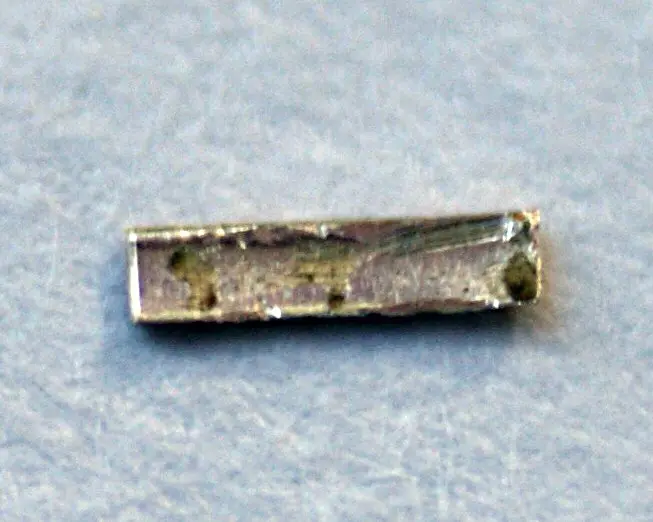
Radium is a soft, silvery-white, highly radioactive alkaline earth metal. Its compounds give off a faint glow in the dark.
All radium is radioactive. It forms naturally in the decay chains of uranium and thorium, and as it decays it produces radon gas.
Quick answers
- What is radium?
- Radium (Ra) is an alkaline earth metal with atomic number 88. It is a solid at room temperature. The intensely radioactive metal discovered by Marie and Pierre Curie. It once lit watch dials; today one radium isotope is used in cancer treatment.
- Where is radium found?
- Radium occurs in tiny amounts in uranium ores: about a third of a gram per metric ton of uranium.
- What is radium used for?
- Its main uses are medicine and history. Radium-223 is used to treat some cancers that have spread to the bones.
At a glance
| Atomic number | 88 |
|---|---|
| Symbol | Ra |
| Mass number (most stable isotope) | [226] |
| Family | Alkaline earth metal |
| Group | Group 2 |
| Period | Period 7 |
| Block | s |
| Electron configuration | [Rn] 7s2 orbital diagram → |
| State at room temperature | Solid |
| Melting point | 700 °C (1,292 °F, 973 K) |
| Boiling point | 1,140 °C (2,084 °F, 1,413 K) |
| Density | 5 g/cm³ |
| Electronegativity (Pauling) | 0.9 |
| Atomic radius | 283 pm |
| First ionization energy | 5.279 eV |
| Oxidation states | +2 |
| Discovery | 1898 · Marie and Pierre Curie |
Discovery
In 1898 Marie and Pierre Curie, working with Gustave Bémont, found that pitchblende was more radioactive than its uranium could explain. They traced the excess to two new elements, polonium and radium.
Marie Curie and André-Louis Debierne isolated radium metal in 1910. Marie Curie received the 1911 Nobel Prize in Chemistry for discovering radium and polonium.
Where the name comes from
From the Latin radius, ray, because of its strong radiation.
Where is radium found?
Radium occurs in tiny amounts in uranium ores: about a third of a gram per metric ton of uranium.
Where every element is found →
What is radium used for?
- Medicine. Radium-223 is used to treat some cancers that have spread to the bones.
- History. Radium paint once made watch and instrument dials glow; this use ended because of its dangers.
What every element is used for → · Where are the elements found? →
Common compounds
| Compound | Formula | Note |
|---|---|---|
| Radium chloride | RaCl₂ | The salt Marie Curie used to isolate radium. |
Notable isotopes
| Isotope | Half-life | Note |
|---|---|---|
| Radium-226 | about 1,600 years | The most stable isotope, found in uranium ores. |
| Radium-228 | about 5.75 years | Part of the thorium decay chain. |
| Radium-223 | about 11.4 days | Used in medicine. |
Safety
Highly radioactive
Radium is dangerous if swallowed or inhaled, because the body stores it in bone like calcium. In the 1920s, workers who painted watch dials with radium paint suffered severe illness.
Its decay product, radon gas, is a radiation risk in some homes.
Did you know?
- Marie Curie’s laboratory notebooks are still radioactive and are kept in protective boxes.
- Radium colors a flame crimson red.
- Before its dangers were understood, radium was added to tonics, cosmetics and toothpaste.
Frequently asked questions
Why did radium glow?
Its radiation makes certain materials, such as zinc sulfide in luminous paint, give off light; radium compounds themselves also glow faintly blue.
Is radium used today?
Only in very limited ways, mainly radium-223 in cancer treatment.
Is radium a metal?
Yes. Radium is a metal, one of the alkaline earth metals.
What are the properties of radium?
Atomic number 88, symbol Ra, atomic mass [226]. It is a solid at room temperature. It melts at 700 °C (1,292 °F) and boils at 1,140 °C (2,084 °F). Density 5 g/cm³. Electronegativity 0.9 (Pauling).
Sources
- Royal Society of Chemistry: Radium
- Encyclopaedia Britannica: Radium
- Nobel Prize in Chemistry 1911 (Marie Curie)
- Science History Institute: Marie Skłodowska Curie
- NNDC NuDat 3 (nuclear data)
- PubChem Periodic Table (NIH)
- IUPAC/CIAAW standard atomic weights
- Royal Society of Chemistry, Periodic Table
- Wikipedia: Radium
Last checked: 16 November 2026
Other group 2 elements
Beryllium
A light, very stiff metal found in emeralds. It is transparent to X-rays, and the mirrors of the James Webb Space Telescope are made of it.
Magnesium
A light, strong metal that burns with a dazzling white flame. It sits at the heart of chlorophyll, the green pigment of plants.
Calcium
The metal of bones, teeth, shells and limestone. Calcium compounds also make the cement and plaster we build with.
Strontium
The element that makes fireworks red, named after a Scottish village. A radioactive form from nuclear tests was once measured in children’s teeth.
Barium
A soft, reactive metal whose heavy compounds show up the gut on X-rays and turn fireworks green.