Element 028
Nickel (Ni)
A tough, silvery metal that keeps stainless steel from rusting. It is in coins, rechargeable batteries and jet engines.
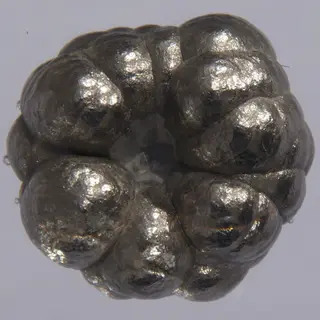
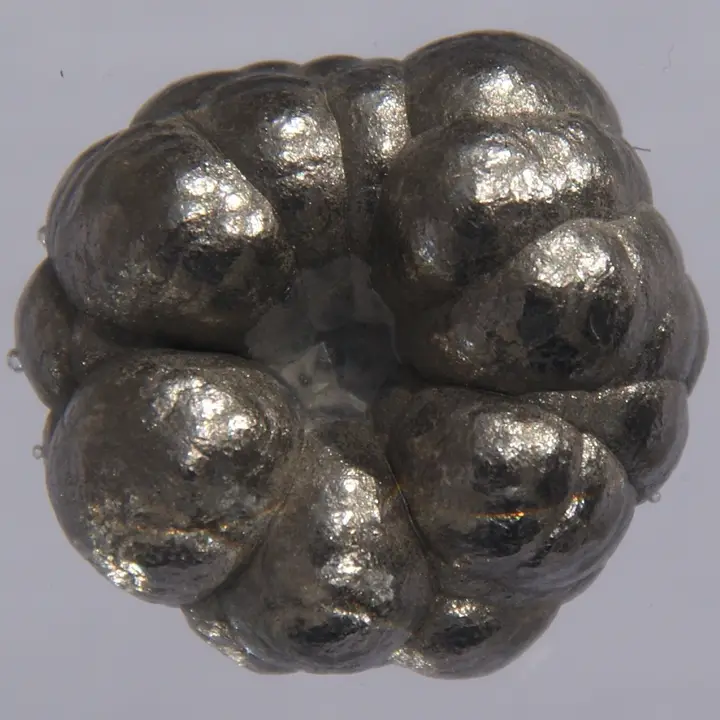
Nickel is a hard, silvery transition metal with a slight golden tinge. It resists corrosion and is one of only three elements that are magnetic at room temperature, with iron and cobalt.
Most nickel is mixed into stainless steel. Growing amounts go into the batteries of electric cars.
Quick answers
- What is nickel?
- Nickel (Ni) is a transition metal with atomic number 28. It is a solid at room temperature. A tough, silvery metal that keeps stainless steel from rusting. It is in coins, rechargeable batteries and jet engines.
- Where is nickel found?
- Nickel is found in sulfide and laterite ores. Indonesia is now the largest producer.
- What is nickel used for?
- Its main uses are stainless steel, batteries and superalloys. The largest use.
At a glance
| Atomic number | 28 |
|---|---|
| Symbol | Ni |
| Standard atomic weight | 58.693 ± 0.001 |
| Natural isotopes | 5 (IUPAC CIAAW 2024) |
| Family | Transition metal |
| Group | Group 10 |
| Period | Period 4 |
| Block | d |
| Electron configuration | [Ar] 3d8 4s2 orbital diagram → |
| State at room temperature | Solid |
| Melting point | 1,455 °C (2,651 °F, 1,728 K) |
| Boiling point | 2,913 °C (5,275 °F, 3,186 K) |
| Density | 8.912 g/cm³ |
| Electronegativity (Pauling) | 1.91 |
| Atomic radius | 163 pm |
| First ionization energy | 7.64 eV |
| Oxidation states | +3, +2 |
| Discovery | 1751 · Axel Fredrik Cronstedt |
Discovery
In 1751 the Swedish chemist Axel Fredrik Cronstedt extracted a new metal from an ore that miners called kupfernickel. They had been frustrated that it looked like copper ore but yielded no copper.
Where the name comes from
From the German Kupfernickel, roughly “copper goblin”. Miners blamed a mischievous spirit for the ore that would not give copper.
Where is nickel found?
Nickel is found in sulfide and laterite ores. Indonesia is now the largest producer. Earth’s core is thought to contain a lot of nickel alloyed with iron.
Where every element is found →
What is nickel used for?
- Stainless steel. The largest use. Nickel makes steel tougher and more corrosion-resistant.
- Batteries. Nickel-rich cathodes are used in many electric-vehicle batteries.
- Superalloys. Nickel alloys keep their strength at the high temperatures inside jet engines and gas turbines.
- Coins and plating. Many coins contain nickel, and nickel plating protects and decorates metal parts.
What every element is used for → · Where are the elements found? →
Common compounds
| Compound | Formula | Note |
|---|---|---|
| Nickel(II) oxide | NiO | Used in ceramics and battery materials. |
Notable isotopes
- Ni-5868.0769%
- Ni-6026.2231%
- Ni-611.1399%
- Ni-623.6345%
- Ni-640.9256%
Percent by number of atoms. The light band shows the range over which the share varies in natural samples. Source: IUPAC CIAAW 2024
| Isotope | Half-life | Note |
|---|---|---|
| Nickel-58 | Stable | About 68.1% of natural nickel. |
| Nickel-60 | Stable | About 26.2%. |
| Nickel-62 | Stable | About 3.6%. It has the highest binding energy per nucleon of any known nucleus. |
Safety
A common skin allergy
Nickel is one of the most common causes of contact allergy, from jewelry, watch straps and buttons.
Some nickel compounds are harmful if inhaled over long periods in industry.
Did you know?
- The US 5-cent coin is called a “nickel”, but it is only 25% nickel; the rest is copper.
- Canada’s huge Sudbury nickel deposit is linked to a giant meteorite impact about 1.85 billion years ago.
- Many iron meteorites are rich in nickel.
Frequently asked questions
Is nickel magnetic?
Yes. Nickel is one of three elements, with iron and cobalt, that are ferromagnetic at room temperature.
Why is nickel used in stainless steel?
It stabilizes a form of steel that is tough, easy to shape and highly resistant to corrosion.
Is nickel a metal?
Yes. Nickel is a metal, one of the transition metals.
What are the properties of nickel?
Atomic number 28, symbol Ni, atomic mass 58.693. It is a solid at room temperature. It melts at 1,455 °C (2,651 °F) and boils at 2,913 °C (5,275 °F). Density 8.912 g/cm³. Electronegativity 1.91 (Pauling).
Read more on OkButWhy
Sources
- Royal Society of Chemistry: Nickel
- Encyclopaedia Britannica: Nickel
- USGS Mineral Commodity Summaries: Nickel
- NNDC NuDat 3 (nuclear data)
- PubChem Periodic Table (NIH)
- IUPAC/CIAAW standard atomic weights
- Royal Society of Chemistry, Periodic Table
- Wikipedia: Nickel
Last checked: 16 November 2026
Other group 10 elements
Palladium
A precious metal that soaks up hydrogen like a sponge. Most of it cleans exhaust gases in petrol cars.
Platinum
A rare, heavy, silvery-white precious metal. Platinum cleans car exhaust in catalytic converters and is prized in jewelry.
Darmstadtium
A superheavy element named after the German city of Darmstadt, where six elements were discovered.